
Chapter Text
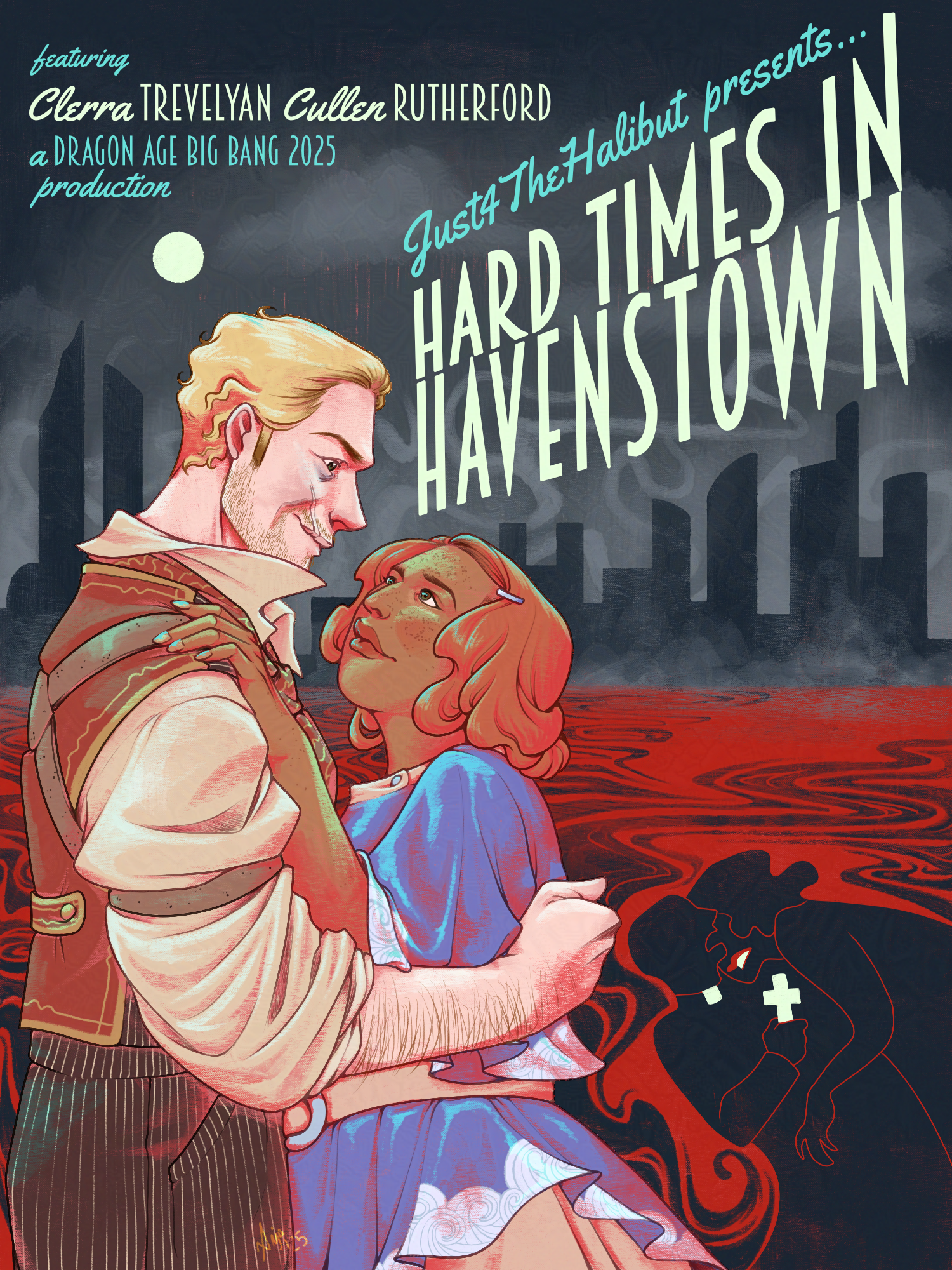
The commotion readily caught Clerra Trevelyan's ear, shouting and racing footsteps outside the tin-and-tarpaper shack, but she didn't have time for it. Right now, her attention was firmly on the woman on the pallet in front of her, because giving birth was difficult in the best of conditions. These weren't that, given Agnes Wiśniewski was swearing up a storm in Polish and had been for several hours, her husband Leon was off standing in the breadline two blocks away and had been for several hours to be sure his family was fed, and their neighbor Adeline was watching the three other Wiśniewski children while their mother labored to give birth to the fourth.
In short, her focus was entirely on this situation, and so she assumed the matter was handled, and went back to her own job. Two hours later, she stood outside the Wiśniewski shack, stretching her sore back and aching knees from kneeling on the dirt floor, squinting into the bleary light of the October dawn. Pleased for Agnes and Leon and their new baby daughter, healthy and squalling up a storm, but worried for them. The crash had happened a year ago now and things just grew worse and worse in Chicago, more people out of work, longer breadlines, bigger shantytowns. Shantytowns barely able to stand, let alone protect against the extremes of Chicago's weather, the brutal snow that could come from living beside Lake Michigan. Sanitation was a hope at best, and God, it felt like some days they were one wrong move away from an epidemic of cholera or dysentery sweeping through this encampment, or one of several others like it within the city, like wildfire.
Speaking of wildfire, as she yawned and rubbed her eyes, she smelled smoke, and scorched wood. She glanced around, and saw a burned-out hut on the next lane, obviously fresh. A definite risk given no electricity and having to rely upon candles and lanterns for light, and campfires and kerosene stoves for cooking, and tired, underfed, exhausted people struggling to make do. The shantytown took fire seriously, with its own volunteer fire brigade that had apparently taken care of the fire briskly enough. She wasn't that surprised. This was Chicago, after all, which overall took the threat of fire quite seriously. Fifty-odd years wasn't enough to erase the city's collective memory of Chicago being engulfed in flames, and the flinch that still came at the threat of fire.
Agnes and her baby would be fine. At least, as fine as Clerra could help them be, both in the delivery and immediately postpartum. A nurse couldn't help far too much of what ailed them right now, and far too many others. She ought to go see if anyone had been hurt in the fire, or the fighting of it, before she headed home to get some much-needed sleep.
As she approached the shack, a young woman came up to her. "Miss, you're the nurse, yeah? The one who was helping Aggie? You done?"
"I am."
"Good. C'mere, you're needed." She had the air of fretful impatience, and Clerra saw now she must have been waiting, watching for her to emerge.
"What happened—" She led her to the burned-out shack, and she stopped in the ruined framework of the doorway, smelling the scents of charred wood and burned flesh, looking at the two figures lying there on a cot. "Oh." Yes, that explained it.
She approached, but their stillness, and having lain there for a while, told her enough. The people of Haventown had done good work, and fast. They'd put out the flames so that the poor people caught in the fire hadn't burned severely, nothing beyond some reddened and blistered skin, but they hadn't been able to save them.
Even so, she would checked, first on the woman lying there. Clerra pushed aside her long grey-streaked black hair, and felt for a pulse, looking for any signs of breathing. "I…" She shook her head. "There's nothing I can do for her."
"Didn't think there was," the woman said, practically vibrating with suppressed energy. "Problem's with him." She nodded towards the other occupant of the bed, obviously a bit older as well given grey liberally flecked his once-chestnut brown hair. "You've been around Haventown enough helping the likes of us out, you gotta know Father Justin."
Her gaze snapped back to the dead man, his weary, unshaven face exposed now after being mostly hidden in the loose cloud of the woman's hair, and she realized this woman was right. She was passingly familiar with the man, given their paths crossed a few times. Father Justin Dorothy of St. Andraste's came down here too when he could, trying to do what he could for those caught in the savage grip of the Depression, irrespective of their professed faith, or even lack thereof. It had made her like the priest all the better for it. "Why is he—"
Why is a Catholic priest dead in bed with a woman? The salacious implications of it were all too clear. "Who is she?" she asked instead. The woman wasn't someone she'd seen before, or met.
"Dunno her myself. Think she's got to be new. Someone around here will, though. Hard to get lost around here, even if the world wants to lose us. We look out for each other." There was a rough edge of anger in the woman's voice that Clerra couldn't help but respect. "They already went and sent for the dick—"
"I beg your pardon?"
"Dick. You know, detective," she said, waving her hand with emphasis on the middle syllable. At Clerra's look of incomprehension, she sighed. "Someone clearly hasn't read detective stories."
"Uh…no, not particularly." It wasn't that she was against dime novels or magazines. God knew she enjoyed a good Varric Tethras adventure. But the lurid images of frightened women in mortal peril on the cover of detective stories rubbed her the wrong way, not least because it seemed intended to titillate. Maybe she'd simply seen too much of the end result of women suffering at the hands of violence—at least, the ones who survived. Seen women forced to return again and again to unsafe homes for lack of anywhere else to go besides.
"They went to call Rutherford. He used to be a copper, left the force, does private work now. Done some stuff for folks around here." She grinned, an expression that looked very much at home on her sharp, angular features. "Actually, I'd say he's a bit of a dick in the other sense, though. Someone jabbed a stick up his ass right through his sense of humor."
Clerra strangled back a laugh at that, a little horrified that she'd almost done so given the two dead people lying there. Grim humor was one thing, but there was a line of appropriateness all the same. "Does this situation require Mr. Rutherford?"
"Golly, I don't know, house starts on fire in the middle of Haventown with people close enough to breath down everyone's necks, and those two don't wake up to all the ruckus once someone shouts 'Fire', and run out the door less than ten feet away? Maybe people dying quiet in fires happens up on the Gold Coast in those fancy mansions, but don't it seem a bit odd to you?"
Now that she'd mentioned it, Clerra had to admit it sounded strange. "You have a point. I should…" If there was going to be a detective, or the police, here, then she probably ought to clear out rather than tracking more mud into the place and moving things around.
"Well, you might as well see what you can see. Figured someone who knows what's what when it comes to medicine ought to take a look before the cops get in here and muck it all up. Only reason they'd maybe give a shit at all is Father Justin."
She was no stranger to sudden death, it was true. Though at least these two bodies looked far more peaceful than many she'd seen overseas. She hardly had to ask what the woman meant by muck it all up. The Chicago police force was hardly known for its sterling reputation of late. Prohibition had done America few favors in the end, and the Windy City least of all, with the gangsters gaining far too much power in Chicago and too many of the police content to take a bribe to look the other way. Smuggling Canadian whiskey or Appalachian moonshine was maybe one thing, she'd admit, but it had turned very bloody over the years as the North and South Side gangs began fighting each other in a power struggle. Even an ordinary Chicagoan couldn't escape the constant news about it, or at least some awareness of the danger.
It was only last year that some of Capone's men had tricked some of their rivals from Moran's gang with the ruse of a police raid that ended up with seven of them lined up facing the wall of a garage in Lincoln Park thinking they were being arrested, and instead mowed down in a hail of bullets. She'd seen some of the pictures in the newspaper, a scene of bodies sprawled everywhere, blood pooled everywhere. It had reminded her far too much of the boys in the trenches.
Did this have anything to do with the gangs? She didn't know. "I'll take a look while we wait on Mr. Rutherford," she answered. She realized she hadn't gotten the woman's name, and looked over at her, taking in the set of anger in her frame looking at the bodies, the determined line of her jaw beneath that uneven blond bob. She took this personally, despite not knowing the dead woman, and Clerra had to like her better for it. "Miss—?"
"Redjenny. Sera Redjenny." She smirked. "Yeah, it's Irish. Guessing you are too by the hair."
She wasn't, actually. But she was used to her red hair and freckles making people assume it. Though at least Sera Redjenny didn't ask, like some did, What are you anyway? If they were even passingly polite. If they weren't, other assumptions were made about what other blood ran in her veins to grant her a tawny cast to her skin that made more than a few people look twice and question if she wasn't entirely white. "Nice to meet you. I'm Clerra Trevelyan."
"Knew that," Sera said with another wave of her hand. "Heard your name around here. Respectfully, mind."
She approached the bed again, looking closer at the bodies. Their eyes were open, sightless and staring. "I need a light." She gestured back in the direction of her bag, left by the remains of the door. "There's a flashlight in my things." She knew that carrying one in calls to Haventown was essential, particularly at night. "Can you get it?"
Silence answered her, and she looked over her shoulder to see that Sera had vanished. She sighed, and headed for her bag, crouching and rummaging for the flashlight, testing it and relieved to see the batteries still had some juice left in them. She'd used it extensively with Agnes, because kerosene lantern light just didn't quite cut it on enough illumination for checking some things.
"Who are you and what are you doing here?" A man's voice came from in front of her, and startled, she gave a yelp of shock, instinctively raised the flashlight, realizing only after she did it that she'd shined it directly in his eyes. She hurriedly pointed it away, looking up to see the man had his hand over his face, presumably light-blinded.
"Sorry! You startled me, and…" And there had been a certain bark to the question, an air of authority, that alarmed her more than a simple query would have. "I'm Clerra Trevelyan. I…are you Mr. Rutherford? Detective Rutherford?" What was his title, anyway?
"Mister," he replied. "And yes. Rutherford. Uh. Cullen, that is. Cullen Rutherford. Which answers who you are, then, but not exactly what you're doing here."
"I was finished assisting with a birth nearby when Miss Redjenny asked me to come take a look at what happened here while we were waiting on you. For, um, a medical opinion, I suppose." Come to think of it, she wasn't sure what the girl had thought Clerra could add to the situation, given the two of them were dead, but she'd simply responded. Blame sleep fatigue and the instinct of answering a call for someone claiming need of her help.
"I assure you there's no medical assistance one can give these two," he said bleakly, gesturing towards the bed. Obviously his vision had recovered from the flashlight. "Miss…or is it Doctor?"
"Miss." She tried to not wince at his asking if she owned the latter title. If only she could have, she'd have gone to medical school in a heartbeat, especially after the war. But she was a woman, and somewhat brown, and didn't come from wealth, and all three of those factors served to handily disqualify her from entry to virtually any medical school. God knew she'd tried, and she'd thought it might finally come together, but other events of course had to transpire. "I'm a nurse." Never mind her lack of reliable employment currently, it was still a title she owned proudly.
"Oh. Well, Miss Trevelyan." She waited for the dismissal, that frustrating feeling of a pat on the head of be a good girl and leave this business to the men, why don't you. He surprised her when he said, "Let's see what your thoughts are, then. But be careful what you touch. There's evidence here that ought not to be disturbed. We'll have to report this to the police, of course, and I'd rather not be accused of tampering."
"Of course."
She approached the bed again. "Do you know who she is?" she asked.
"I don't." There was a measured evenness to the words, rather than an impatient dismissiveness. "Though I knew Father Justin slightly."
"He was a good man." It ached to say it in the past tense.
"He was." She looked closer at the woman, noticing she had slightly smeared crimson lipstick on, heavily rouged cheeks, and what appeared to be hastily-applied dark liner along her eyelids in the style film stars had made popular, exaggerating the eyes and making them appear larger and dramatic. Cosmetics? Somewhat badly done, but she supposed without a mirror, or perhaps a pocket compact at best—still, it seemed odd. Especially on a woman she judged was probably even a little older than Father Justin, given cosmetics had only recently become a somewhat tolerated thing, and that only in young women. Clerra herself at thirty-one as of last week had passed that cusp, and the dead woman was probably close to twice that.
"You've noticed something." He'd been watching her?
"Do you need to take notes here?"
"I shall for my thoughts, but keep your impressions, if you would. So they don't influence mine. But I would…like to discuss them and write them down after this, if you wouldn't mind. There's a diner a few blocks from here."
"I wouldn't mind breakfast," she admitted. "It was a long night."
Then she saw it. She couldn't spot it as easily on the woman given the lipstick, but that blueish tinge to Father Justin's lips stood out. She leaned close, sniffing, but unfortunately the scent of smoke and char and a rather heavy musky perfume on the woman overwhelmed everything else. There was a pinkish cast to parts of their skin as well, one that she'd initially dismissed as the woman wearing rouge, that helped further prod her suspicions.
She heard his footsteps behind her as she continued her inspection, at least as much as could be done without disturbing the bodies. Looking around the shack, presumably, for further evidence. She heard the click of a camera at a few points, and glanced over her shoulder to see him with a pocket camera in hand, shining his own flashlight on things as he photographed them. He didn't have a good photographic apparatus for this kind of situation, and strangely it made her feel a little better, as if he was scrounging his way through things himself.
The morning sun rose higher, and the light grew somewhat better in the half-standing frame of the house, as he came over to take pictures of the two bodies. After he'd done so, she saw him reach for the slightly singed blanket kicked to the foot of the bed, using it to cover the bodies, pulling it up over their faces and restoring some dignity to them.
That seemed to be all that could be done, and she stood back as he turned to her, gesturing that they should leave. Neither of them spoke as they walked out of Haventown, which suited her. The grim sight they'd seen wasn't exactly conducive to small talk, and she wasn't much inclined to it at the best of times beyond expected courtesies.
The bite of autumn was sharp in the morning air, and she pulled her coat tighter around her. She'd been born here, raised here, but wryly she had to think that something in her mother's blood made her less predisposed to enjoy the chill. She had never seen Hawai'i, only heard Anthea Trevelyan's wistful stories about the warm, sun-drenched land of her childhood.
He paused at a telephone on the corner. "I need to report the deaths to the police. I'm not certain if anyone in Haventown has done it already."
"Yes, of course."
She waited while he spoke to the operator, asking to be connected to the Redcliffe police station. He spoke briefly, giving whomever picked up on the other end a description of the situation, and a chill ran down her spine as he said openly what she had thought. "No, not natural. Either suicide or murder. There's enough funny about it, including a fire being set, that it doesn't quite add up for suicide either."
He sighed, his hand gripping the phone tighter, his free hand going to rub between his eyes, sounding exhausted and frustrated. "Look, Barris, I trust you, but we both know that—well." He paused, listening. "Yes, all right. Thanks."
He hung up the phone. "You don't sound very confident," she said, venturing the words cautiously. Sera Redjenny had said he'd left the police himself for whatever reason, and that edge of impatience and resignation in his voice speaking to Barris, whoever he was, made her think his opinion of the Chicago Police Department was still perhaps not particularly positive.
"It's going to fall under the jurisdiction of Redcliffe station, and I'm afraid that John Harrith's crooked enough that he wouldn't know the straight and narrow if the line of it was chalked on the sidewalk for him. My suspicion is that he'll call it a suicide to keep things tidy, and be back to his bathtub gin in his office by lunchtime." He didn't even say it derisively, more with an air of accepting the inevitable.
She absorbed that in silence, not certain what to say. "I beg your pardon," he said awkwardly, taking off his hat, clutching it in one hand. "I'm not…well, I've been discourteous to a lady. You've been up all night and I did promise you breakfast in return for your impressions, so please, let me fulfill that at least."
Taking a look at him now in the full light of day, he was a tall, broad-shouldered man, perhaps thirty or thirty-five. Fair skin dusted with freckles now that summer had just recently faded. His blond hair was neatly slicked back, but a few bits rumpled from their place by his removing his hat made her suspect it was curly, and he used the pomade to try to tame it. As a fellow member of the messily curly-haired, she sympathized. He also looked as though he'd been up all night himself, somewhat hooded golden-amber eyes bracketed with the shadows of exhaustion.
She hoped he didn't think she was callous for thinking about breakfast, after the sight they'd just seen. Or raising an eyebrow at a larger woman eating, given the fashions of the last few years were clearly made for slender, almost boyish frames that were very much in style, rather than her well-padded curves. But he made no remark about it, and when she thought about it, she supposed the police had it rather like people in medicine. Seeing and dealing with some horrible things, and having to eat to keep their strength up, and learning to shut the horror out, to pack things into their neat little compartments in order to carry on. She remembered being nineteen and seeing burned men from the trenches, staring at the bacon on her plate in that Red Cross tent and wondering if she'd ever be able to eat it again. It took only a few days. One didn't become numb so much as…somewhat realistically hardened to maintain sanity and not be overwhelmed to the point of uselessness, she supposed.
The Golden Nug looked like a greasy spoon of the best sort, slightly shabby and running around the clock, and most of the seats were full. The smell of the coffee as he held the door for her made something unknot within her chest. It was the scent of something normal, mundane.
They sat down and she ordered coffee and toast. He raised one eyebrow. "Is that all you want?"
She felt herself blushing, glancing away in embarrassment. Sir, I have sixty-seven cents in my pocket at present and no job. If he hadn't asked her to come here, she'd have simply gone home to eat. "My funds are—"
She cut herself off in horror. Oh, damn and blast. Was he now going to think she was angling to get him to pay? This wasn't a date.
"No, no, it's on me," he said. "Please. Order whatever you like."
She tried to draw the line and emphasize it. "Isn't that…unethical if you're interviewing me?"
He gave a low chuff of dry amusement. "If I were still a detective, yes, perhaps I could be accused of attempting bribing a witness. However, I'm not a detective, and breakfast is a rather cheap bribe." His eyes went wide, and his hand went up in a pleading gesture. "Not that I'm implying you're cheap, Miss Trevelyan. Or…uh….for sale. At all."
This was going very well, clearly. "I see." She hurriedly added some bacon and scrambled eggs to her order to make the awful moment of awkwardness, as well as their very clearly entertained waitress hovering devouring every word, go away.
"I appreciate it. Though, you know, breakfast would sadly be a decent bribe for too many people of late," she said with a tired sigh. There were far too many jobless, homeless, and hungry people now. Chicago's reliance on manufacturing meant that seeing people queuing up in breadlines or crowds of men outside factories hoping for even occasional day-work was a glum new normal.
"It would. And I have the feeling this will all unfortunately get worse before it gets better, despite assurances from Hoover and his ilk." He paused as Amused Waitress came back and poured their coffee, and Clerra gratefully took a sip of it. Good coffee too, strong but clearly not left to sit too long. It warmed the slight chill in her bones. At least she had a well-built home to go to, and warm clothing. Those in Haventown weren't so fortunate. "Your thoughts? As I said, I'd rather I not influence you. With breakfast or otherwise."
She actually appreciated that they weren't going to go through social chatter first. "I agree with you that they didn't die in the fire. I'm admittedly far less versed in matters like dealing with fires than you, but whether it's suicide or murder, I believe they died by cyanide poisoning."
"Cyanide. And upon what do you base that impression?"
"His lips were somewhat blue. Hers—well, they may well have been, under the lipstick, and let me return to that in a moment?"
"Certainly." His gaze sharpened.
"And the pink tint to their skin." When she said it, it didn't really sound like much. Had the discoloration perhaps just been bruising?
"Have you encountered cyanide poisoning before, miss?"
"I have." She looked down at the cup of coffee in her hands, trying to not recall too many details. "Mustard gas and such were more the usual in the trenches during a gas attack, but they did use cyanide gas now and again in the war."
"You were over there?" There was a note to his voice when he asked that was utterly familiar. A sort of respect, gratitude, fellow-feeling that she only saw in those who'd been there as well.
"I was a Red Cross nurse. I assume you were in the Army, Mr. Rutherford?"
Now it was his turn to glance aside. "Yes. I was." Clearly the less said about it, the better. Also not unfamiliar to her. So many who'd been there carried scars, and not only on their bodies, but the worst ones were all too often in their minds. That thin scar on the right side of his upper lip that tracked almost up into his cheek, faded with age, might well be from those days.
"I see. I don't assume that cyanide gas would have been used…" Now she was thinking aloud. "It would have affected far more than those two."
"I didn't see cyanide's effects. Would it be a method one would typically use to take one's own life?"
"It…" She hesitated. "It's a relatively swift end if the dose is high enough. Which…I imagine it likely was to give that strange discoloration. But it can be quite painful. If one meant to do harm, it seems to me that a gunshot would often be quicker and more certain."
"You'd be surprised," he muttered, half to himself.
"I've seen the job botched," she assured him coolly. He looked at her, surprised. "I worked at Ostwick Community Hospital for a while." God, she'd seen several botched suicides by gun, and certainly more of them this year after last October's market crash. She hoped he wouldn't ask how recently she'd worked at Ostwick, and why she no longer was employed there.
"Ah. But the noise of gunfire would have attracted attention, especially in such a crowded place."
"Oh. Yes, you're right about that. They seemed to be oddly peaceful lying on that bed for cyanide poisoning, in my opinion. Those I saw who suffered from it were…" No point in being delicate. "They looked as if they died in agony. I suppose there may be some difference between ingesting it, as these two in Haventown must have, and breathing it in, and yet…"
Amused Waitress came back bearing their plates, food steaming and smelling delicious, and both of them immediately shut up, as if realizing that discussing the contortions of cyanide victims and the finer points of botched suicide attempts wasn't precisely sane and ordinary breakfast table discourse. But this hardly seemed like a sane and ordinary world any longer.
They ate in silence for several minutes after that. She let herself enjoy the meal, tired and hungry as she was. Oddly, she almost missed the conversation, though, bizarre as it was by everyday standards. It felt in some ways like discussing medical matters with a colleague, consulting each other and trying to solve some puzzling situation and arrive at a diagnosis. When she thought about it, she supposed police work was the same. Putting all sorts of clues and pieces together to arrive at a solution. There was something about it that sparked her interest, perhaps the challenge of it, and the idea of mending something by pursuing it. Justice in this case, she supposed, rather than a human body.
"You had mentioned something that you had put aside for the moment," he said, obviously looking to pick the thread up again after their coffee cups were refilled and they had finished their meals, and apparently deciding a decent interval had passed so they weren't literally discussing death and murder while eating. "The woman's lipstick?"
"I—well, it seems strange to me that she would be wearing lipstick and eyeliner and perfume as a woman in these conditions."
"What conditions? Living homeless in a shantytown? Isn't there something to be said for a woman taking pride in her appearance despite her circumstances?"
"Yes, of course there is. But it's poorly applied, with no mirror and all. She would risk looking…" She sought the right word. "Sad and pathetic, I suppose. Effort wasted. And the fact she's an older woman, it seems very odd to me."
He thought that over for a moment. "Would she perhaps use it to try to appear more youthful?"
She was wryly thankful he didn't point out that some women clung to their youth with their fingernails until even said fingernails splintered and broke. Because freshness and beauty and it earning a man's attention was all too often a woman had. "With obviously grey hair and some wrinkles?" It seemed incongruous.
"A couple of cheap cosmetics may have been what she could afford. Or what she had remaining to her from her former life." There was a sad, almost gentle note in his voice when he said it.
She blushed, feeling chastised, but not unfairly. She'd seen how hard women worked to make use of what little they had, to take some pride in their appearance despite hardship. All too often it was a nicer apron, a new ribbon on a hat, or the like, but who was to say how this woman had reacted? "I don't mean to say I judge her, please understand. There's no sin in wishing to feel beautiful. Only that…well, all too often beauty is in the eye of the beholder, and that eye can be unkind. Particularly towards a woman who's no longer young."
He nodded, and a glimmer of kindness was there in his eyes, and she liked him better for it. "How well did you know Father Justin?"
"Only very slightly."
"It was the same for me." He took a contemplative sip of coffee, hand clutching the handle of the mug a little too tightly. Finally he looked at her directly and said, "Do you believe they could have been lovers?"
"He's a priest, aren't they supposed to be celibate—" It sounded silly as soon as she said it. Ideally, those held up as pillars of goodness earned it. But she knew that wasn't always the case. She also blushed, realizing she'd said celibate, hoping it hadn't been too loud. Though to be fair, he'd started the impropriety by bringing up their potentially being lovers.
"Pardon me for being indelicate, but I wonder about that, or her being…" He coughed. "An unfortunate?"
A prostitute, he meant, and was obviously trying to be delicate towards her female sensibilities. She wryly decided to not remind him she might be unmarried but she was well aware of prostitutes, and venereal disease, and such things, from seeing them firsthand as a nurse. "I don't know," she said. "I…I didn't know him well enough. And I don't know her at all, not even her name, let alone what circumstances brought her to Haventown. Though it's probably the same as far too many desperate women, unfortunately. A lack of other options. No family, no money, a husband or lover who left her high and dry. No skills for a job, and most places won't hire women anyhow. And there can be other problems. Addiction, especially these past ten years, is a growing problem in the city…"
"Yes, quite, I'm familiar with dope fiends," and from the edge to his tone, he didn't want to hear her lecture on addiction, let alone how too many medications sold at a pharmacy still contained opium, and while it often needed a prescription now compared to when she'd been a girl, it was prescribed for anything and everything. They might have banned a fiendish substance like heroin six years ago, but that didn't help those who'd already been ensnared by it as a supposedly gentler alternative to morphine. To say nothing of cocaine and its use among the fast set with their wild parties and drinking.
"Pardon me, I didn't mean to go on."
"No, no, you didn't. I apologize. It wasn't your fault. That one hits a little close, but I shouldn't have lashed out at you." So he likely had an addict in his family, and she felt a pang of sympathy. For a moment she considered—after all, they'd given morphine to so many boys after being wounded on the battlefield. But no, he seemed far too alert and vital and present to be under the influence of opium himself. He looked tired, but his gaze was keen and his mind seemed sharp. "I'm prone to giving a lecture myself when I get going on a topic, despite however many people cutting me off saying it's hardly what they came there for."
"There's nothing wrong with being passionate about something," she protested. "My God, we've spent a whole decade now acting as if to care about anything is laughable, and it leaves people looking for ever-more extreme thrills to stir them from their unbearable ennui. Hence the bathtub gin and wild parties. And the jake leg and blindness and poisoning that come from drinking something someone cooked up in their basement without any oversight whatsoever." And there she went on another lecture.
"As you say. And the violence that's come along with all of it being the stuff of gangsters and petty bootleggers and breaking the law becoming an everyday occurrence." He gave a tired sigh, rubbing his eyes again. But he gave her a slight smile, one that made him look younger. "Though I admit it's nice to hear someone agree with me that Chicago isn't entirely lost."
"I…I like to think not. I was born and raised here, after all."
"Ah." The smile grew a little, creasing the corners of his eyes.
"What?"
"You do rather have that Chicago…" He waved his hand in the air, searching for the right word. "Hustle," he said finally. "It's a certain stubborn, quiet industriousness and yet openly calling a spade a spade."
She thought he meant it as a compliment, albeit a somewhat peculiar one. "You're not from Chicago yourself, then?"
"North Dakota, originally. Stubborn, quiet industriousness, absolutely. We prefer to not call a spade a spade until someone really obliges it, at which point we throw up our hands and complain about the very existence of spades."
North Dakota? A farm boy, then. He looked like it, with the blond hair and freckles and earnestness. Chicago must have been a dramatic change, whatever brought him here, and it must have been something severe to have sent him from a likely family farm where people tended to put down deep roots. But she wasn't going to ask. Sometimes wounds needed to be prodded and examined, and sometimes they didn't. Given as a veteran of the Great War, it might be related to that, she was even more reluctant to pry. "I see."
Her attention ended up caught as the notes of Hoagy Carmichael's Georgia On My Mind faded, the radio behind the counter switching from music instead to a newscast, the clipped, jovial tones of the broadcaster very evident. "Turn it up, would you please?" Cullen requested of the cook behind the counter, half-turning in his seat to better hear it. The cook obliged, turning the volume knob up on the radio.
She turned to listen as well, curious as to whether anything about the deaths in Haventown could possibly have made the news yet, or whether anything had happened that could be connected and make some sense of it. They weren't the only ones suddenly paying keen attention, she noticed. The tumultuous nature of things of late made everyone sit up and pay notice, even as there was something of a sense of fatigue at being drowned in what seemed like nothing but extraordinary bad tidings.
"Philliam Bard here for WTDS, with the morning news of the city update for the good—and even the bad, ha!—citizens of Chicago. The arrest yesterday of the dastardly George 'Bugs' Moran on charges of vagrancy and concealing weapons continues the downward slide of the North Side tough guy, who lost most of the muscle of his gang last year in the St. Valentine's Day Massacre. Will Capone and his South Siders take advantage of this latest misfortune visted upon his ever-more-ragged rival? Will Moran end up like his partner in crime, Dean O'Banion, a shocking spectacle of a bullet-riddled corpse among the blossoms of a flower shop?"
"Moran isn't a florist like O'Banion was, so I doubt it," Cullen muttered, almost to himself.
"My impression is that Mr. Moran wouldn't have much appreciation for things like flowers," Clerra said wryly. When the man had earned the nickname Bugs because people thought he was crazy and violent, the intricacies of flower-arranging didn't seem much in keeping. She'd seen some mental disorders, after all.
He chuckled. "No, probably not."
Bard continued, "Further news today for the boys in blue, as Police Captain Meredith Stannard, commander of Kirkwall station, was removed last night by Commissioner Lucius Corin. The now-Mister Stannard was then immediately committed to Lyrium Springs Asylum. Reports are the former policeman's nerves underwent far too great a strain under his strict standards of enforcing Prohibition on an unruly Windy City. It appears Bugs Moran isn't the only one gone nuts in the gang dogfight for the soul of the city. We wish Captain Stannard the best in his recovery and thank him for his service."
Clerra's hand went to her mouth in shock. Lyrium Springs? It was an asylum downstate for the mentally unwell and insane. For a police captain to be committed there, it was more than just jangled nerves needing a rest, perhaps a quiet retirement. Captain Stannard must indeed have gone mad.
She saw Cullen blanch at that news. "You knew Captain Stannard, I imagine? I understand the police are a somewhat close-knit fraternity."
He didn't quite look at her as he carefully placed his silverware on his now-empty plate. "You might say that. He was my captain."
But he had left the police. By the sound of it, Captain Stannard hadn't been removed for corruption. If anything, Stannard been too sincere in trying to fight the lawlessness of the past decade. Did that mean Cullen had disagreed with him on that? He didn't seem particularly in favor of Capone. She had readily assumed he'd left the force due to corruption. There was a story here, and one that she was both a bit afraid to ask for and recognized she was hardly entitled to demand. She had just met the man, and she'd likely never encounter him again to boot, except perhaps in passing in Haventown.
Meanwhile, Philliam Bard continued onward, and both of them seemed eager to drop the topic of the police captain gone mad, going silent and returning to the newscast. "In his speech last night at the Ancient Order of Altus charity dinner, Seth Amladaris announced his intention to run for mayor of Chicago in next year's election. The former Seventh Ward alderman, rusticating for fifteen years as a community councilman for his home Tevinter neighborhood, had this to say."
The voice switched from Bard's smooth, excited radio-ready tones to a deeper, more sonorous voice. "I say to you that we find ourselves in a position fallen from our former greatness, and that it is unacceptable. This city was built by men of vision, and has been brought low by those of small minds, thinking only of their own pockets or their next bottle of liquor, or else thinking only of giving a handout to every bum and immigrant who approaches with a hand held out and a sad story. They do not think of the great legacy of Chicago, the glorious innovative White City of the Columbian Exposition, the determined phoenix that rose from the ashes of the Great Fire. Why should Chicago suffer so particularly for the idiocy of the bankers of New York City? Why should Chicago be the industrial might that supports all of America, to our cost now? Why should we have handed it over to the filthy hands of crooks like Capone, and allowed them to have more power than our own police and politicians?"
Clerra heard a few murmurs of agreement from other patrons of the diner around them. Chicago's unemployment seemed to soar by the day. A city built so heavily on manufacturing was brought low and people were left out of jobs when people around the country stopped ordering and buying things due to severely strained wallets. Chicago bearing a disproportionate cost for the results of the growing Depression on the entire nation wasn't an uncommon anger buzzing through the city these days.
Still, that part about handouts to every bum and immigrant chilled her. It had been the unapologetic sharks on Wall Street who caused the trouble, hardly the ordinary people who worked hard and wanted only a chance for a good life. They were the ones left now standing in breadlines and living in the likes of Haventown.
Amladaris continued, "The thrones of the gods of Wall Street and the White House stand empty, gentlemen. Their promises are hollow. We cannot wait like feeble invalids to be taken care of, nor should we. Our city stands at the mercy of gangsters, and that cannot stand either. All decent, law-abiding people must demand a return to the natural order of things. Our power is mighty, but it's been sapped. We must look inward, and both clean house and take charge of our own destiny again, and regain our former stature. As our glorious city's next mayor, I will make you this promise—Chicago first, Chicago always!"
A roar of applause and cheers in the background of the radio broadcast erupted at the triumphant shout of those last words. Clearly the man's sentiment struck a chord with some.
Clerra heard a derisive snort behind her and someone said, "Fool," the word dripping with contempt. Privately, she had to agree. Attempted isolation hadn't worked for America on the whole with the Great War, and hadn't the Civil War itself been an attempt at withdrawal and isolation? Even Japan after its two centuries of fierce isolation had eagerly rushed to join the modern world and make up for lost time—rather too eagerly, if some of the impatient saber-rattling reports from Asia were any indication. Amladaris urging Chicago to withdraw only to its own concerns felt like a liver or lung insisting it was no longer a part of the body and would somehow function on its own.
Well, she wouldn't be voting for Mr. Amladaris in the mayoral election herself, suffice it to say. She had to wonder how a man who'd been rusticating, to use Bard's word, for fifteen years felt about the fact that women had gained the vote since then and thus would have to be politically courted as well. He'll probably just tell the men to go home and inform their silly-minded little wives how to vote. Even some of the nicest men she knew seemed to have the impression that on any decision of consequence, women had to be led around like horses on a halter rope because they lacked the intellect to understand and decide the matter on their own.
Never mind that most women she knew were keen-minded enough to daily manage a myriad of household duties, do the shopping, balance the home's budget and accounts to a razor's edge, and raise their children, none of which was the hallmark of stupidity or laziness.
She'd encountered it often enough at Ostwick. Doctors frequently assuming she, as a female and a nurse, had only a fraction of the brain and knowledge they did. Perhaps only a fraction of the arrogance is more likely. Being unmarried still at her age only caused her to be regarded as more of an object of suspicion or condescending pity as that most unnatural of creatures, the spinster, the professional woman.
The professional woman who was, like far too many these days, now without steady employment. At least she had her family, though, and their love and support. That was a blessing far too many weren't given.
But there was still the need to earn what pay she could for herself, and to try to do what she could for others, and the more she sat here in the Golden Nug maundering over it all, the less that was possible. She looked over at Cullen Rutherford, sensing things drawing to a close between them. She couldn't say it had been a lovely conversation, given the thrust of it, but he had been fairly nice company, for all that. But it was time to return to reality. "We agree it was likely murder by poison," she said, keeping her voice low. "But…we don't know who she was, or what he was doing there. And from what you say, it's not going to go anywhere, is it?" Why had he asked her to talk, in that case? Only to confirm his own suspicions, simply to be forced to drop them?
He looked at her directly, and the flicker of tired sadness in his eyes told her everything, even before he admitted, "No. As I said, Harrith will likely wrap it up with a nice neat bow out of expediency. I can investigate it as much as my time and access to evidence and witnesses will allow, but…I've got one hand tied behind my back without a badge, and then an ex-detective's word against an activately serving police captain? It won't go far."
She understood all too well the trouble of no longer possessing formal authority in one's profession, though she wouldn't say so. Is it worth all the effort, the sorrow, and the heartbreak for whatever happened to Father Justin and his mysterious lady companion, when you're one man shouting into the wind? Was the effort alone worth it, on principle? Looking at him, at the glimmer of resolve she spied in his expression all the same, she had an inkling. "And yet, you'll pursue it."
He didn't hesitate in his answer. "I will, when I can. I owe it to them. Even if justice isn't done on this earth, it matters that someone cared enough to look into it and find the truth."
"Then I wish you all the best in your investigation, Mr. Rutherford. If I can be of any assistance…" How? She was a nurse. She tried to keep the living in that state. The dead needed others to take up for them.
"Yes, please, let me get your telephone and address." She wasn't going to be foolish enough to believe for an instant that he wanted them for any other purpose. Strictly professional, and that was fine. He was a handsome man, and well-mannered, but she was far too old for foolish flights of fancy at a pretty face and kind smile. "I must warn you that the police may want to talk to you as well, as a witness and one of the first on the scene. I'll have to give your information to them."
"That's understandable." She reached for her coin purse, mentally calculating the cost of the food. He had offered, but maybe it was just a false courtesy, and her pride wouldn't allow her to simply nod and accept it without one last offer.
"No, no." He waved her off. "I said the meal was on me, and I meant it. Please. I appreciate your sharing your impressions with me." His own wallet didn't look too thickly filled, but he had least had a few bills contained within it, so he was in better shape than her.
She managed a smile. "Then thank you." She got to her feet, feeling the low ache in her back still there. She would have a few hours to sleep at home before going to take her turn at the MacTirs' house. Clerra's job was mainly to keep Celia MacTir company, read to her, and give her medication for the pain if necessary, while Loghain was busy at work as an alderman. Loghain wasn't an overtly warm or kindly man by any stretch of the imagination, blunt of feature and brusque of word, but he cared for and about his dying wife with a fierce tenderness.
Love wasn't all wine and roses and moonlight and passionate kisses. Sometimes it was endurance and devotion in the face of the unbearable. It seemed, she thought, as the bell chimed overhead as she pushed the front door of the diner open, a fitting description for the current situation. The honeymoon of the Twenties was over, and they were now in the hell. And all they had to get through this was each other.
But in these times, it seemed even more of a terrible thing that there were those who didn't help, but actually harmed. Someone was out there who had killed a priest and a middle-aged woman living in desperate straits, and she had to admit that like Cullen, she wanted to know why.